
How to Stay Safe When Gambling with Crypto: A 2026 UK Guide to Spotting Trustworthy Tether Casino Sites
How to Stay Safe When Gambling with Crypto: A 2026 UK Guide to Spotting Trustworthy Tether Casino Sites
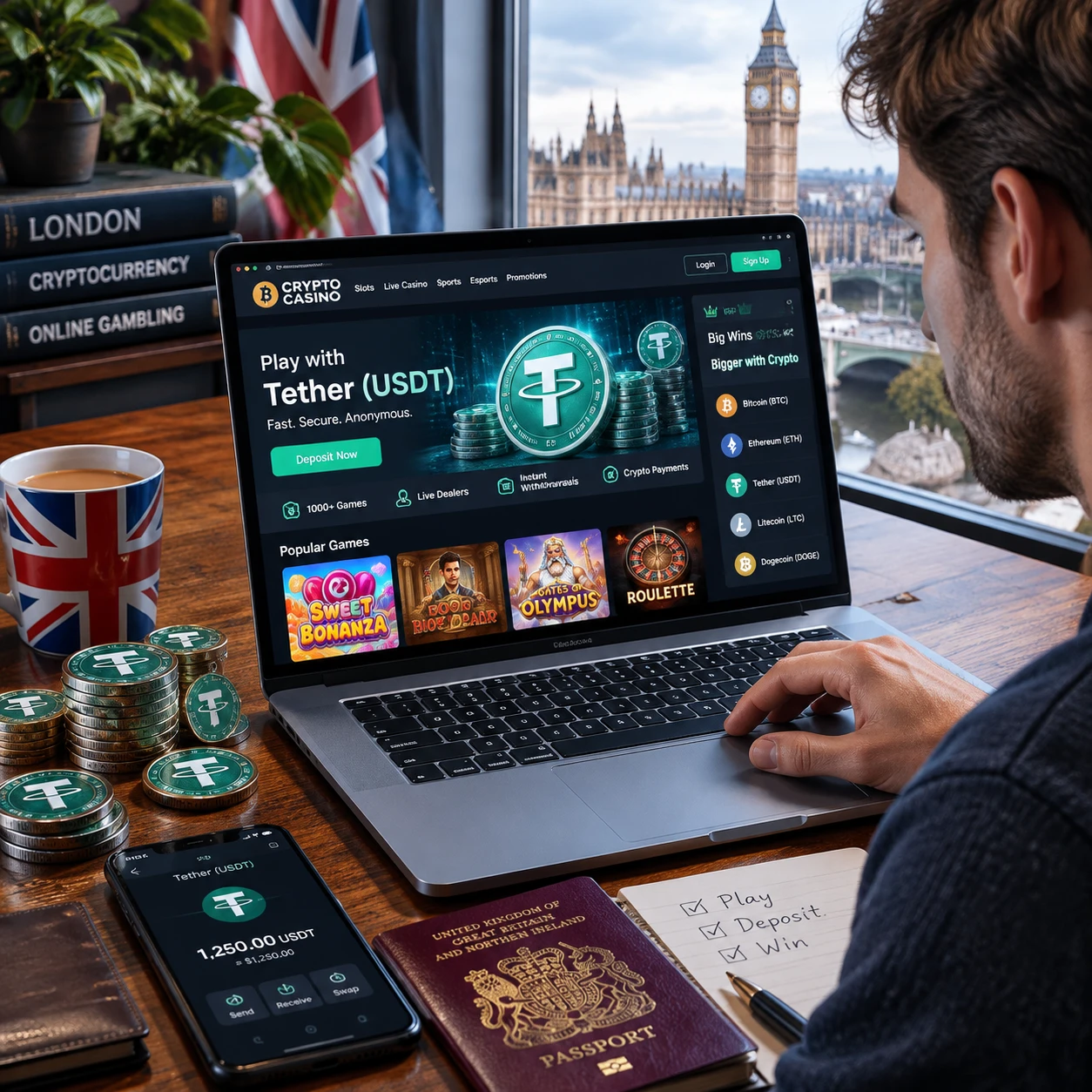
I've spent a fair bit of time over the past year poking around crypto gambling platforms, and one thing kept standing out: Tether-based casinos aren't some niche curiosity anymore. They're quietly becoming the default pick for a huge chunk of UK players. The appeal's obvious once you see it — instant deposits, withdrawals that don't vanish into a three-day limbo, no need to hand your banking details over to a site you're not entirely sure about.
But here's the catch I keep circling back to. The same features that make crypto casinos convenient also make them a playground for scammers. Spotting the difference between a genuinely trustworthy operator and a slick copycat isn't always straightforward, especially when both can look identical on the surface. Sometimes it really is a coin flip at first glance. That's exactly what this guide's for — walking you through what actually matters before you send a single satoshi.
What Are Tether Casino Sites?
Tether, or USDT, is what's called a stablecoin — pegged roughly 1:1 to the US dollar, so you're not watching your bankroll swing wildly just because the broader crypto market had a rough morning. Tether casinos run on this principle: you deposit USDT from your wallet, the site credits your account in a dollar-equivalent balance, you play, and withdrawals go back out the same way. Everything runs on blockchain rails, so transactions are verifiable, usually fast, and don't depend on a bank's opening hours or some fraud department deciding your transfer looks 'suspicious.'
For UK players, this has become genuinely appealing compared to cards or e-wallets, which can come loaded with delays, declined transactions, or those awkward conversations with your bank about gambling-related payments. USDT sidesteps a lot of that friction.
USDT vs. Other Cryptocurrencies for Gambling
If you've ever deposited Bitcoin into a casino and watched its value drop 8% while you were mid-session, you'll get why USDT has become the preferred option for serious bettors. Bitcoin and Ethereum are great for long-term holding or speculation — but their volatility makes them a bit of a wildcard when you're trying to manage a gambling bankroll with any precision. USDT removes that variable almost entirely. What you deposit is roughly what you're playing with, hours or even days later.
Why UK Players Are Drawn to Crypto Gambling in 2026
Beyond price stability, there's a handful of reasons crypto gambling has taken off here. Withdrawals that used to take days now often clear within minutes. Transaction fees are typically lower than card processing fees. There's a privacy angle too — you're not necessarily tying your gambling activity to your everyday banking history. And frankly, crypto literacy among UK bettors has grown massively. People who wouldn't have touched a wallet app three years ago are now moving USDT around without a second thought.
That said, this space sits in a genuine regulatory grey area. Many crypto casinos operate under licences from jurisdictions with looser oversight than the UK Gambling Commission, which means the burden of due diligence falls more heavily on you, the player. Not meant to scare you off — it just means homework is non-negotiable.
Red Flags That Signal an Untrustworthy Platform
After looking at dozens of these sites, certain warning signs keep popping up on the sketchier ones:
- No licensing information, or licensing details that can't be verified anywhere
- No registered company name or business address listed
- Bonuses that promise absurd returns with vague or buried wagering terms
- Withdrawal policies that are deliberately confusing or inconsistent
- Customer support that's slow, evasive, or simply doesn't exist outside a chatbot
- A pattern of unresolved complaints across forums and review sites
Any one of these alone might be forgivable. Two or three together, and I'd close the tab.
Fake Licensing and Jurisdiction Tricks
This is one of the sneakier tactics out there. Scam sites will often display a licence number that looks legitimate at a glance but either doesn't exist, belongs to a different company entirely, or comes from a jurisdiction that essentially rubber-stamps anything for a fee. Curaçao, for instance, has multiple sub-licensing bodies with wildly different standards. The fix is simple but tedious: take the licence number, go to the regulator's own public register, and search it directly. If the operator's name doesn't match what's listed there — that's your answer.
A Practical Checklist for Vetting Tether Casino Sites
Before depositing anything, I run through this list every single time:
- Confirm the licence against the regulator's official database
- Look for provably fair gaming certification, ideally with a way to verify game outcomes yourself
- Read the withdrawal limits and typical processing times — not just the marketing copy
- Contact customer support with a real question and see how fast and how useful the reply actually is
- Search for independent audits from firms like iTech Labs or eCOGRA
- Check the site uses SSL encryption and has clear wallet security practices
Doing all this manually for every platform you're curious about eats up a lot of time — honestly, that's why I've started leaning on curated resources instead of starting from scratch each time. For UK players wanting a pre-screened starting point, independent directories reviewing tether casino sites can save hours of research by filtering out unverified operators before you even get to the checklist stage.
Responsible Gambling with Cryptocurrency
One thing I don't think gets talked about enough is how crypto's speed actually works against you psychologically. A bank transfer has natural friction — it makes you pause, sometimes takes a day to clear, and that gap gives your brain a moment to reconsider. Crypto doesn't have that. You can deposit and be back in the game within seconds, which quietly removes a safeguard most people don't even realise they're relying on.
Practical ways to counter this include setting hard deposit limits through your wallet management practices, using self-exclusion tools on platforms that offer them, and actually using a blockchain explorer to track your own spending over time. Seeing the raw numbers laid out, rather than just a vague sense of 'I've spent some crypto this week,' tends to be sobering in a useful way.
Recognising Problem Gambling Signs Early
Some patterns worth watching for in yourself or someone close to you: chasing losses with bigger bets, hiding gambling activity from family or partners, or borrowing crypto specifically to keep playing. None of these are small things. If they sound familiar, it's worth reaching out to support services like GamCare or the National Gambling Helpline sooner rather than later.
Common Mistakes UK Crypto Gamblers Should Avoid
A few mistakes I see repeated constantly: weak wallet passwords with no two-factor authentication — basically leaving your front door unlocked. Depositing more than planned because 'it's just crypto' and somehow feels less real than cash. Skipping the terms and conditions on bonuses, only to discover the wagering requirements are borderline impossible to clear. And trusting random casino promotions that show up unsolicited on social media or Telegram — legitimate operators rarely need to spam strangers to get attention.
Conclusion
Crypto gambling with Tether genuinely offers real advantages for UK players: speed, stability, lower fees, and more control over your own funds. But none of that matters if you end up on a platform that disappears with your deposit or buries you in impossible bonus terms. Verify the licensing. Run through a proper checklist. Lean on reputable pre-screened directories when you can, and keep your own spending habits honest with tools that give you real visibility.
Do that consistently, and crypto gambling in 2026 stops being a gamble in the risky sense. It starts being what it should've been all along — a faster, more transparent way to play.